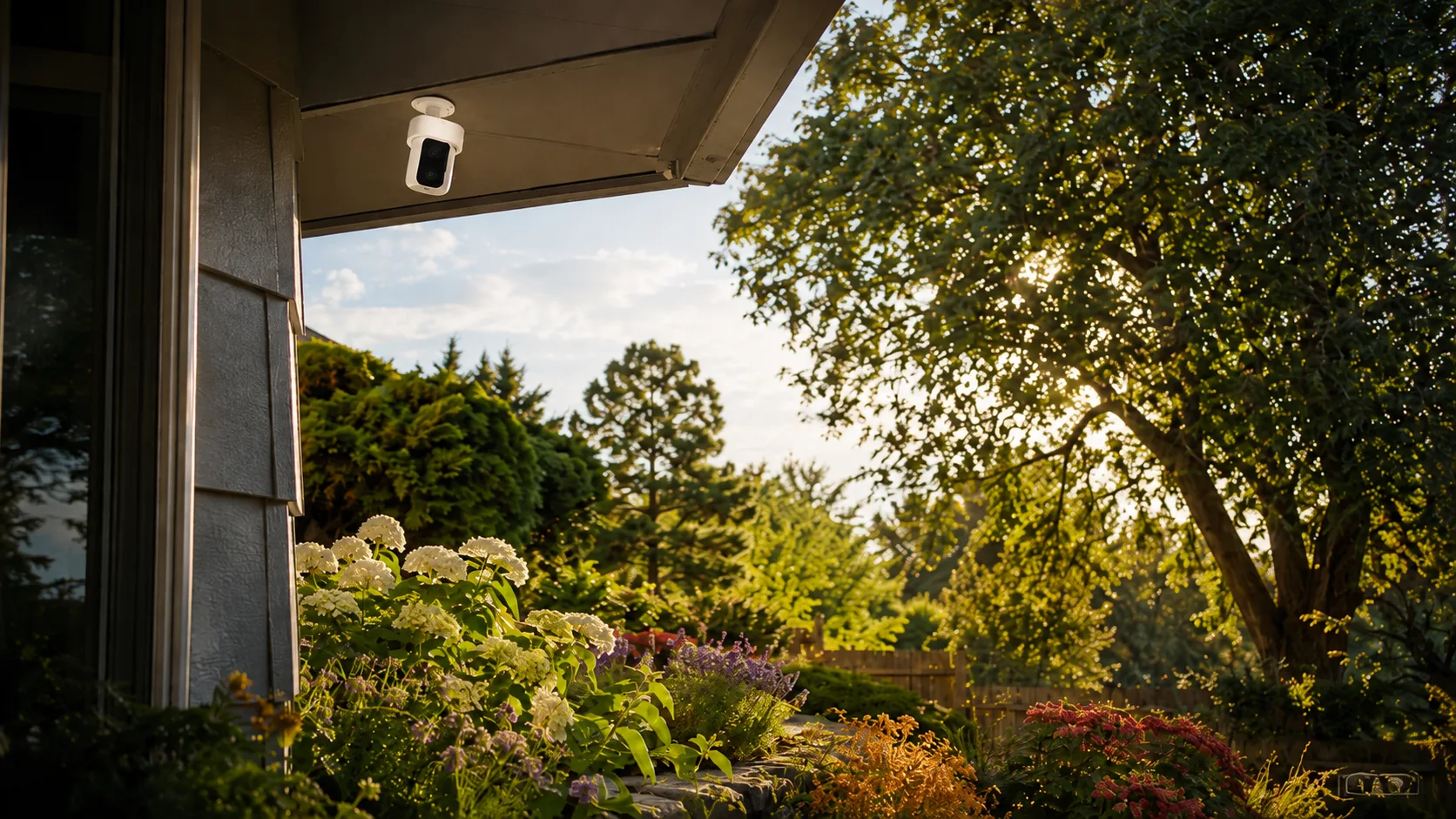
A Ring camera pointed at the wrong part of your yard is like a security guard facing the wrong wall. It still works. But if you want to use it for garden tracking with Greenlapse, a few small placement decisions make a big difference. Here's what actually matters.
Which Ring cameras work best
Most Ring cameras with an active Ring Protect subscription will work. A few are naturally better suited than others:
- Stick-up cams are the most flexible. You can mount them anywhere and aim them however you want. Best fit for garden tracking.
- Floodlight and spotlight cams work well once installed, but they're usually pointed at a driveway or patio. Repurposing one for garden tracking usually means picking a new mount spot.
- Doorbell cams see whatever's in front of your front door. If that's a garden bed, great. If not, you're limited to what the doorbell sees.
- Pan/tilt cams can cover a wide area, but Greenlapse captures from a single fixed angle, so the pan and tilt features aren't used. Fine to use as long as you set the angle and don't touch it.
The placement rules that matter most
Mount high, aim down. A camera 8 to 12 feet off the ground looking down over a bed gives you a natural top-down composition. Low, oblique angles look worse in timelapses and make plant identification harder.
Face north or south. Cameras pointed east catch harsh direct sun at sunrise and blow out. West-facing cameras do the same at sunset. In the northern hemisphere, a north-facing camera gets the most consistent light throughout the day. South-facing is a solid second choice.
Fit the whole zone in the frame. A camera that sees your entire flower bed gives Greenlapse more usable data than a tight shot of one plant. You can always add close-up photos manually if resolution isn't quite enough for the individual plants you care about.
Common mistakes to avoid
- Placing the camera behind glass (like inside a window pointing out). Reflections, condensation, and window screens distort captures.
- Battery-operated cameras that need frequent swaps. Every time you take the camera down to swap the battery, you risk moving it slightly. That shows up as a jump in your timelapse. Screw them in tight and try to pick a mount you won't touch for months.
- Cameras pointed at a busy area. If a car pulls into the driveway during Greenlapse's noon capture, that frame is wasted. Prefer angles that don't overlap with moving vehicles or people.
You don't have to move anything
If your Ring camera is already earning its keep watching the front door or the driveway, Greenlapse will still work with whatever's in the frame. These placement rules are for the ideal case, or if you have a spare camera you can dedicate to garden tracking. Perfect isn't required.